A production-ready product
A running system on your own domain: frontend, backend, database and hosting set up and ready for real users from day one.
MVP development
We build your MVP as working, production-ready software, delivered by the person you actually talk to, at a fixed price you know up front. Based in Odense, building for all of Denmark.
Get an estimate within 24 hours
Reply within 24 hours, usually same day
An MVP (Minimum Viable Product) is the smallest version of your product that delivers real value to real users, and proves the idea works. It has to solve one core problem end to end, run reliably in production, and be something you can put in front of customers, investors or grant assessors. A good MVP is not a prototype or a slide deck: it is working software you can keep building on once the first users have spoken.
What you get
Every MVP we deliver is built to survive contact with real users, and to be built on afterwards.
A running system on your own domain: frontend, backend, database and hosting set up and ready for real users from day one.
The code lives in your repository, documented and handed over. No licenses, no lock-in to us, you own all of it.
You see working software every week and can change course while changes are still cheap, not after the project is over.
A prioritised list of what was deliberately left out of the MVP, and what should be built once the first users have spoken.
We hand over the code, documentation and operations setup, and stay available for changes and fixes, quoted per task.
How it works
No surprises. You know the price and the timeline before we write a line of code.
Free and technical, directly with the person who will build your MVP. We pin down the core problem and cut everything else.
A written offer with scope, timeline and a fixed price, numbers you can use directly in a budget or a grant application.
We ship working software every week. The quote includes a concrete date for when the MVP goes live.
We deploy to production and hand over the code, documentation and access. After that we stay available for changes and fixes, quoted per task.
The honest comparison
Three legitimate ways to get an MVP built, each with real strengths. Here are the differences as we see them.
| Criterion | Freelancer | Enterprise agency | TwinCurrent |
|---|---|---|---|
| Delivery time | Varies, often fast, but depends on one person’s calendar | Typically months, process and release gates take time | A concrete delivery date in the fixed quote, with weekly demos along the way |
| Price level | Lowest | Highest | In between, and fixed before we write code |
| Direct access to the developer | Yes, you talk to the person who builds | Rarely, project managers and account managers in between | Yes, you talk directly to the person building your system |
| Help after delivery | Rarely, most freelancers hand over and move on | Yes, often as an expensive support agreement | Yes, changes and fixes quoted per task |
| Risk | One person is a single point of failure if they get sick or busy | Low technical risk, but high price and timeline risk | Small team backed by a fixed quote, weekly demos and operations after delivery |
Funding
If you are applying for Innofounder or InnoBooster at Innovation Fund Denmark, your application is judged in part on technical delivery certainty: can this team actually build what they describe? A working MVP moves you from “we have an idea” to “we have a product users can touch”, and that is hard to argue with.
We have been through Fonden for Entreprenørskab (the Danish Foundation for Entrepreneurship) ourselves and received their Mikrolegat, so we know the difference between a pitch deck and what assessors actually weigh. We build the MVP that makes the technical part of your application concrete: a running product, a realistic architecture and a fixed quote you can put real numbers on.
A running product on a URL that assessors can click through, not just screenshots in a slide deck.
A fixed written quote with numbers you can put straight into the application budget.
Honest technical scoping: what the MVP proves, and what deliberately waits until after the grant.
Proof
You get a fixed, written quote within 48 hours of the scoping call.
You see working software at weekly demos, from the first week.
You talk directly to the person who writes your code.
TwinCurrent has received the Mikrolegat grant from Fonden for Entreprenørskab (the Danish Foundation for Entrepreneurship).
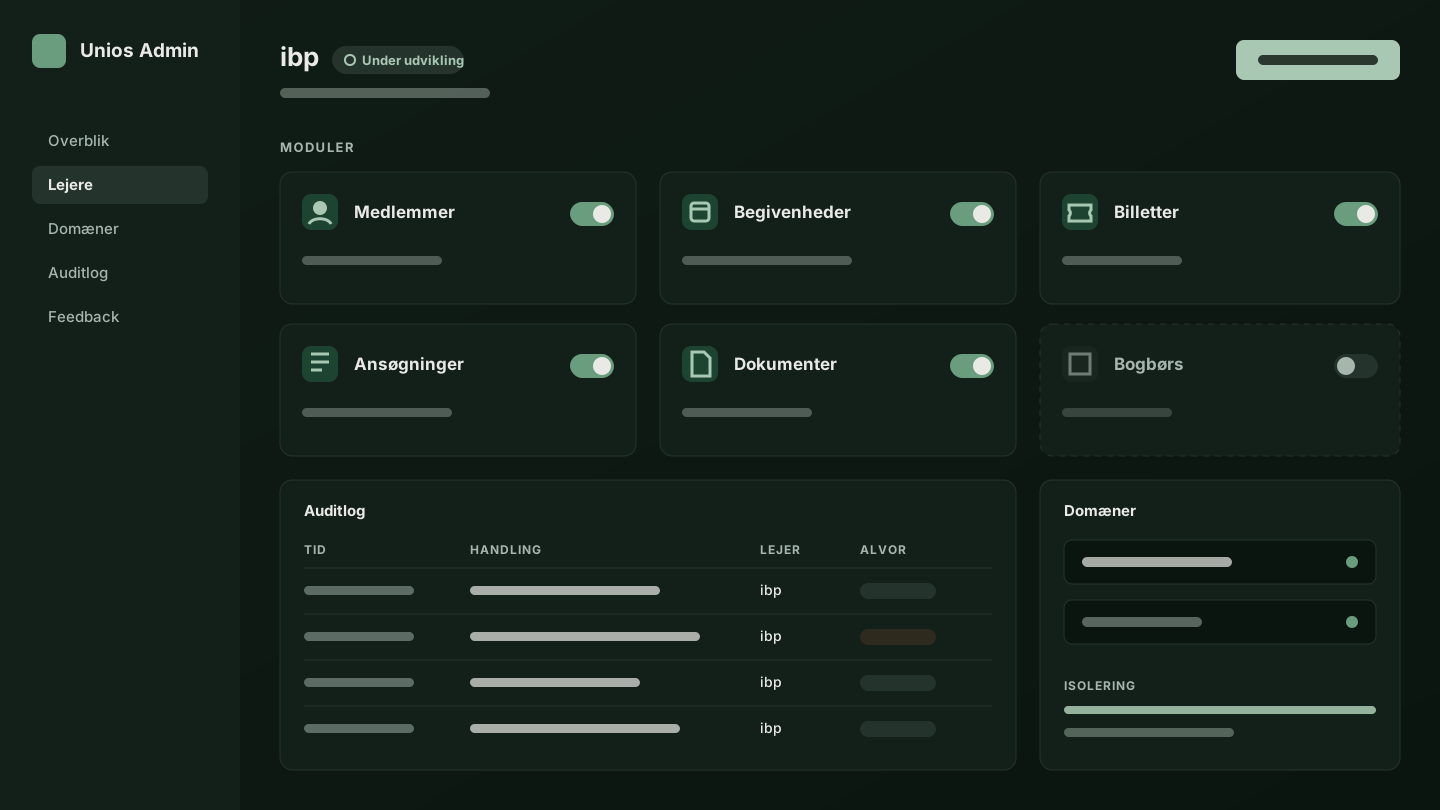
In development
Multi-tenant SaaS platform for student unions and member organisations, built by TwinCurrent and in development, with IBP Union as the intended first tenant: admin site builder, Rust/Axum backend and Next.js frontend.
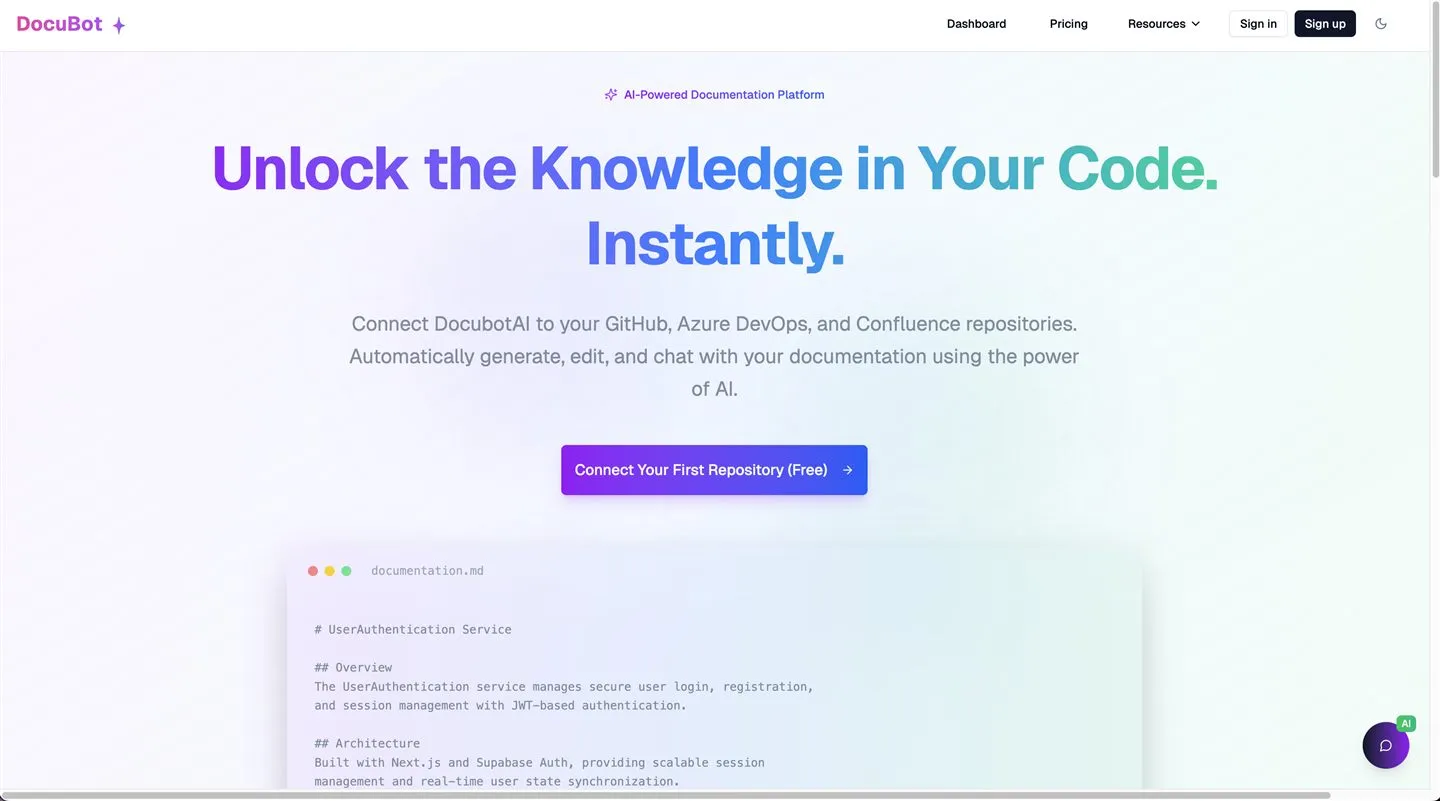
In beta
AI documentation platform that analyses codebases and keeps docs up to date: GitHub and Azure DevOps integration, chat with your docs, export to Confluence, PDF and Markdown.
Pricing
We don’t publish list prices, because honest numbers require a concrete scope. These are the factors that actually move the price of an MVP:
The number of screens, user flows and roles. The sharper the core problem is cut, the cheaper the MVP.
Payments, login, email and third-party APIs cost more than a self-contained system.
AI features, multi-tenant architecture and real-time data push the price up; a classic CRUD app pulls it down.
Full handover, plus any changes or fixes you want from us afterwards, quoted per task.
You get a fixed, written quote within 48 hours of the scoping call, and the price does not change unless you change the scope.
FAQ
It depends on three things: scope (how many screens and flows), integrations (payments, login, third-party APIs) and complexity (AI, multi-tenant, real-time data). That is why we don’t publish list prices: they would either be too high or too low. Instead you get a fixed, written quote within 48 hours of the scoping call, with scope and timeline included, so you can decide on real numbers.
It depends on scope, and the quote includes a concrete delivery date. A sharply scoped MVP without heavy integrations can go faster; complex integrations or AI features can take longer. You see working software after the first week, so you don’t have to wait until the end date to know whether we are on the right track.
You do, full ownership from day one. The code lives in your repository, documented and handed over, with no licenses or lock-in to us. You can always take the code to another supplier.
We help with the technical part, not the application text itself. That means: a working prototype or MVP that assessors can see and touch, a realistic architecture description, and a fixed quote with numbers you can put straight into the budget. We have been through Fonden for Entreprenørskab ourselves and received their Mikrolegat, so we know what technical delivery certainty means in practice.
We hand over the code, documentation and operations setup. After that we stay available for changes and fixes, quoted per task, so you can build the most important improvements once the first users give feedback.
A proven, modern stack: Next.js and TypeScript on the frontend, Rust/Axum or .NET on the backend, and PostgreSQL as the database: the same foundation as our own platforms, including DocubotAI (in beta) and Unios (in development). We don’t experiment at your expense: the technology choices must be something any competent developer can take over, not just us.
Tell us about the idea: you’ll get a fixed quote with scope and timeline, not a sales call.
Get an estimate within 24 hoursSee our workSee all services
Reply within 24 hours, usually same day